Services · Green spaces and tree care
Tree Stability Assessment (VTA)
WhatsApp+39 320 0858322info@parideporpora.it
A tree in a square, a park or a condominium courtyard is a living being with a history — one it tells to those who know how to look. Every choice about it — pruning, consolidating, caring for it over the years — turns out well when it starts from listening: looking properly, before deciding. VTA is how I look.
In brief
When a stability report is needed. A leaning tree or one with a cavity, fungal fruiting bodies at the collar, dead branches in the crown, a failure after a storm, a request from the municipality, a condominium meeting that has to decide, a property to sell or buy with mature trees in the garden.
What you receive. Site visit, a record for each specimen, a motivated failure probability class, care recommendations with the re-check interval, the authorisation framework for the case, photographic documentation. A digitally signed report, usable at a condominium meeting, with the municipality and with your insurer.
Who signs it. A Dottore Agronomo registered with the Salerno Order of Agronomists (no. 873), working with the Visual Tree Assessment method, the SIA Protocol and the CONAF 2026 national guidelines for tree risk assessment.
Do you have a tree that worries you?
Send me two photographs of the tree and where it stands: I reply within one working day, with an initial exchange to understand what is genuinely needed before talking numbers. Site visits and stability reports in Salerno and its province.
Message me on WhatsAppWhy proper looking matters
When a mature tree, in a city or a courtyard, shows signs that no one can read any more, two things typically happen. Either the technician who arrives gives a visual verdict — it can stay or it must come down — without explaining anything, or an instrumental survey is prescribed before anyone has understood what the tree is saying to the naked eye. Both paths skip the most important step: genuinely understanding.
The same defect, on two different specimens, tells different stories. A thirty-centimetre basal cavity does not mean the same thing on a cedar that has been resealing its wood with ten years of callus formation and on a cedar that has stopped reacting. An old wound with complete woundwood says something very different from a recent wound without any. Distinguishing these stories requires time, trained observation and — this is the point — the willingness not to write the conclusion before reading it.
The Japanese tradition has given institutional form to this approach to arboriculture. Since 1991, Japan has certified a dedicated professional figure, the Jumokui (樹木医, literally tree doctor), managed by the Japan Greenery Research and Development Center in Tokyo. The vocabulary is medical: diagnosis and care. That is the same thing I try to bring to daily work, between Pellezzano and the contexts that call for it.
How I conduct it
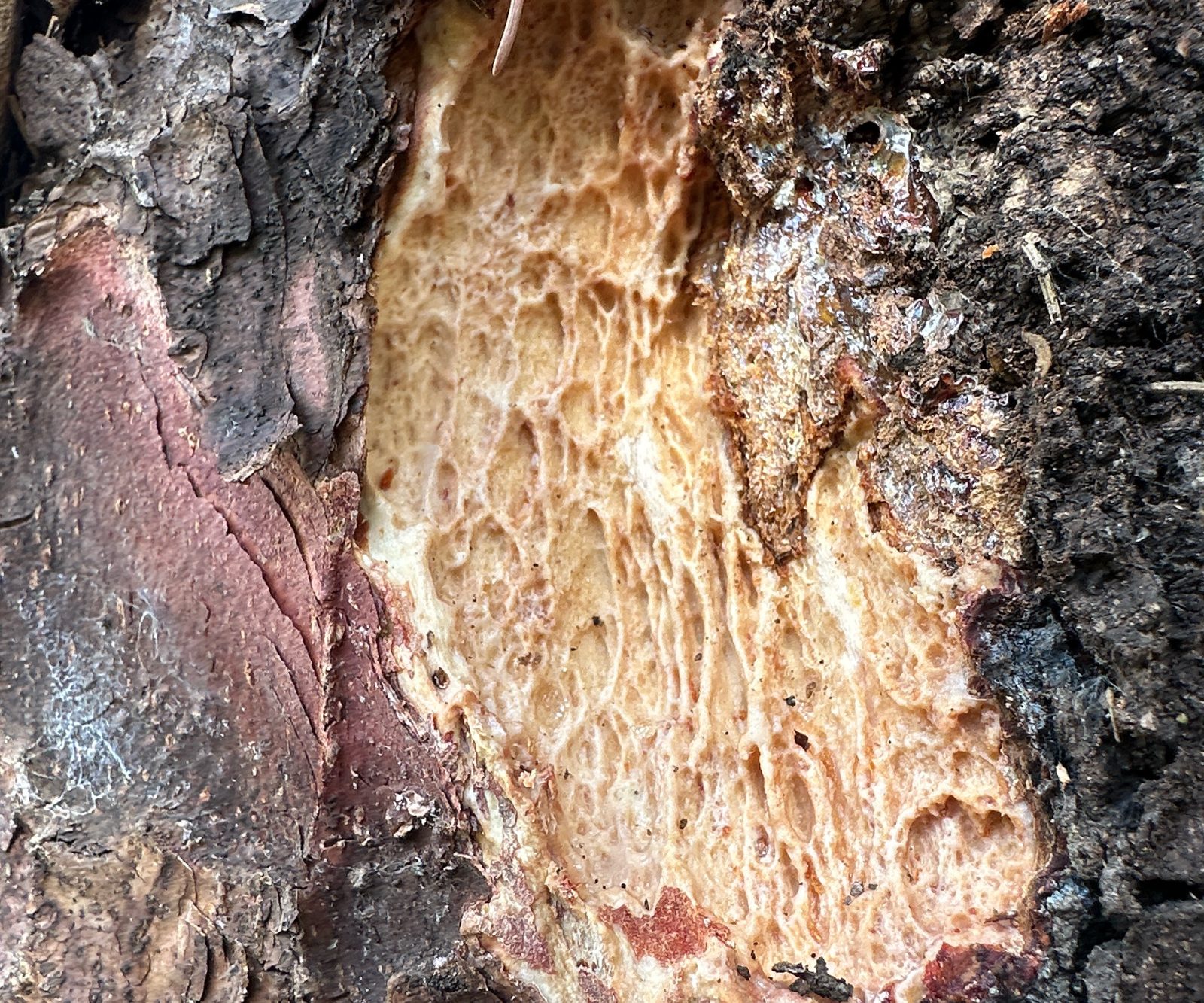
Observe before prescribing. Every VTA begins with a pre-visit study (maps, historical aerial images, any previous assessments) and an anamnesis interview with the client: when was the tree planted, what has changed around it, what interventions it has undergone, what symptoms appeared and when. The site visit comes after, never before.
Systematic visual inspection. The specimen is examined top to bottom and all the way round, with a checklist that leaves nothing behind. Standard descriptive parameters are recorded (DBH, estimated height, ULCR, vigour, crown density, dieback, transparency).
Reading reactivity. Signs are interpreted together. This is where CODIT doctrine (compartmentation of decay in trees, Alex Shigo) and the biomechanical reading of the specimen come in. Understanding whether the tree is still reacting, or has stopped reacting and when, changes everything.
Instrumental survey (when needed). Resistograph, sonic tomography, controlled pulling test. Never to replace visual reading — always to confirm or refute a specific hypothesis. When investigation exceeds the Studio’s own instruments, I work with specialist colleagues with whom I collaborate regularly.
Motivated classification. I use the CPC (Failure Probability Class) of the Italian Arboriculture Society — from class A (negligible risk) to class D (imminent failure, removal as last resort). The class is not assigned by impression: it is assigned by documenting, for each specimen, why that class and not another.
Care recommendations, not standard intervention lists. For each specimen the intervention depends on context. I distinguish what is urgent from what is schedulable, what needs only further monitoring from what can help accompany a specimen towards a dignified old age rather than immediate removal. And if removal is the most sensible course, I say so clearly and explain why.
The liability framework
Whoever has legal custody of a tree is liable for damage caused by its fall (art. 2051 of the Italian Civil Code, Joint Sections of the Court of Cassation, ruling 5422/2021). Exemption from liability rests on proving force majeure, and that proof is built by demonstrating that a diligent custodian did what they should have done. A documented VTA, conducted by a qualified professional, is today the primary instrument by which this diligence is demonstrated — and this is another reason why it deserves to be done seriously.
What I deliver
For each assignment, a complete dossier: technical summary report, detailed record for each specimen, documentary photographic annex, ornamental value assessments where applicable. Everything digitally signed.
I operate primarily in the Salerno area — Salerno, Baronissi, Pellezzano, Cava de’ Tirreni, Battipaglia, Eboli, Capaccio-Paestum, Agropoli and the Agro Nocerino-Sarnese — and across Campania, with availability for assignments outside the region.
A real case: three conifers in a condominium courtyard
Spring 2026, province of Salerno. A condominium asks me whether three large conifers in the courtyard — a fir, a juniper and an Atlas cedar — are dangerous. The question is one; the answers are three.
The pre-visit study, the interview with the residents and the systematic field survey tell three different stories. The fir is reactive: its defects warrant an annual check, and it stays (class B). The juniper carries an advanced bark canker and cavities on every main branch: removal is the proportionate choice, argued in writing, with replacement entrusted to a different species (class D). The cedar has a cavity at the collar that leaves a genuine doubt by eye: here, and only here, an instrumental survey earns its place. Six resistograph probes measure, in the south and south-west sectors, a residual wall of sound wood between 0.1 and 2 centimetres over a radius of 41 — a t/R ratio between 0.00 and 0.05, far below Mattheck’s critical threshold of 0.30 — and confirm class D.
Outcome: one tree accompanied over time through monitoring, two removed with a report that explains why, ready for the residents’ meeting, for the municipality and for the regional Plant Health Service. The instrumental survey concerned one tree out of three: it is used where it decides something, and the report says where.
Frequently asked questions
Do you carry out tree surveys in Salerno and its province?
Yes: the tree stability report — the VTA — is the core of my work in Salerno, Baronissi, Pellezzano, Cava de’ Tirreni, Battipaglia, Eboli, Capaccio-Paestum, Agropoli, in the Agro Nocerino-Sarnese and across the whole province. For reports on trees that have already fallen, damage and value appraisals, see the page Agronomic surveys and appraisals.
What does a tree stability report contain?
The site visit, a record for each specimen with the parameters surveyed, the failure probability class (CPC, SIA Protocol) with its reasoning, photographic documentation, care recommendations with the re-check interval and the authorisation framework for the case. The report is digitally signed and stands as a document for the condominium meeting, for the municipality and for the insurer.
Who can commission a tree survey? Is it used for a condominium meeting?
The owner, the condominium manager, a public body, a company, a lawyer acting for a client. In a condominium the report is the document on which the meeting votes with full knowledge of the facts: it says what to do, to which tree, how urgently and why.
When does a tree genuinely need to be removed?
Removal is the last resort, not the starting point. It is reached only when the assessment — and, if needed, instrumental investigation — shows that the specimen has stopped reacting and the risk can no longer be reduced through care or consolidation. When that is genuinely the case, I say so clearly and explain why; when it is not, I say that equally clearly.
How do I know whether a tree is dangerous?
You cannot tell at a glance: a large, apparently unhealthy tree may be stable, and a seemingly healthy one may not be. What is needed is a systematic reading of signs and tissue reactivity. That is exactly what VTA does: turn an impression into a motivated risk class.
How much does a tree stability report cost?
It depends on the number of specimens, the context and any instrumental investigation required. I do not give a price at sight: first I understand what is needed, then I send a quote, written and itemised, before any commitment.
Is an authorisation needed to work on a tree in a protected or regulated area?
Often yes: heritage trees, landscape protection constraints or local green regulations may require authorisation before pruning or removal. The assessment report sets out the authorisation framework for the specific case.
How often should the VTA be repeated?
It depends on the failure probability class assigned: specimens in higher classes need re-evaluation at shorter intervals. The re-check interval is stated in the report, not left to chance.
Where do you operate?
Primarily in the Salerno area: Salerno, Baronissi, Pellezzano, Cava de’ Tirreni, Battipaglia, Eboli, Capaccio-Paestum, Agropoli and the Agro Nocerino-Sarnese. Across Campania in general and, for assignments with particular characteristics, outside the region.
What is the difference between a tree survey, VTA, “tree analysis” and “stability check”?
No substantial difference: they are different names for the same thing — a tree stability assessment conducted according to the Visual Tree Assessment method and the SIA Protocol, delivered as a signed report. What varies is not the name, but how closely one actually looks.